
Method · Example
7D analysis of Toyota: business model and the Toyota Production System
Toyota builds and sells vehicles in large numbers worldwide. What sets it apart is less a single product than the way it produces: the Toyota Production System. It aims to eliminate waste and deliver vehicles quickly, at low cost and in high quality. It rests on just-in-time, jidoka and daily improvement by every employee.
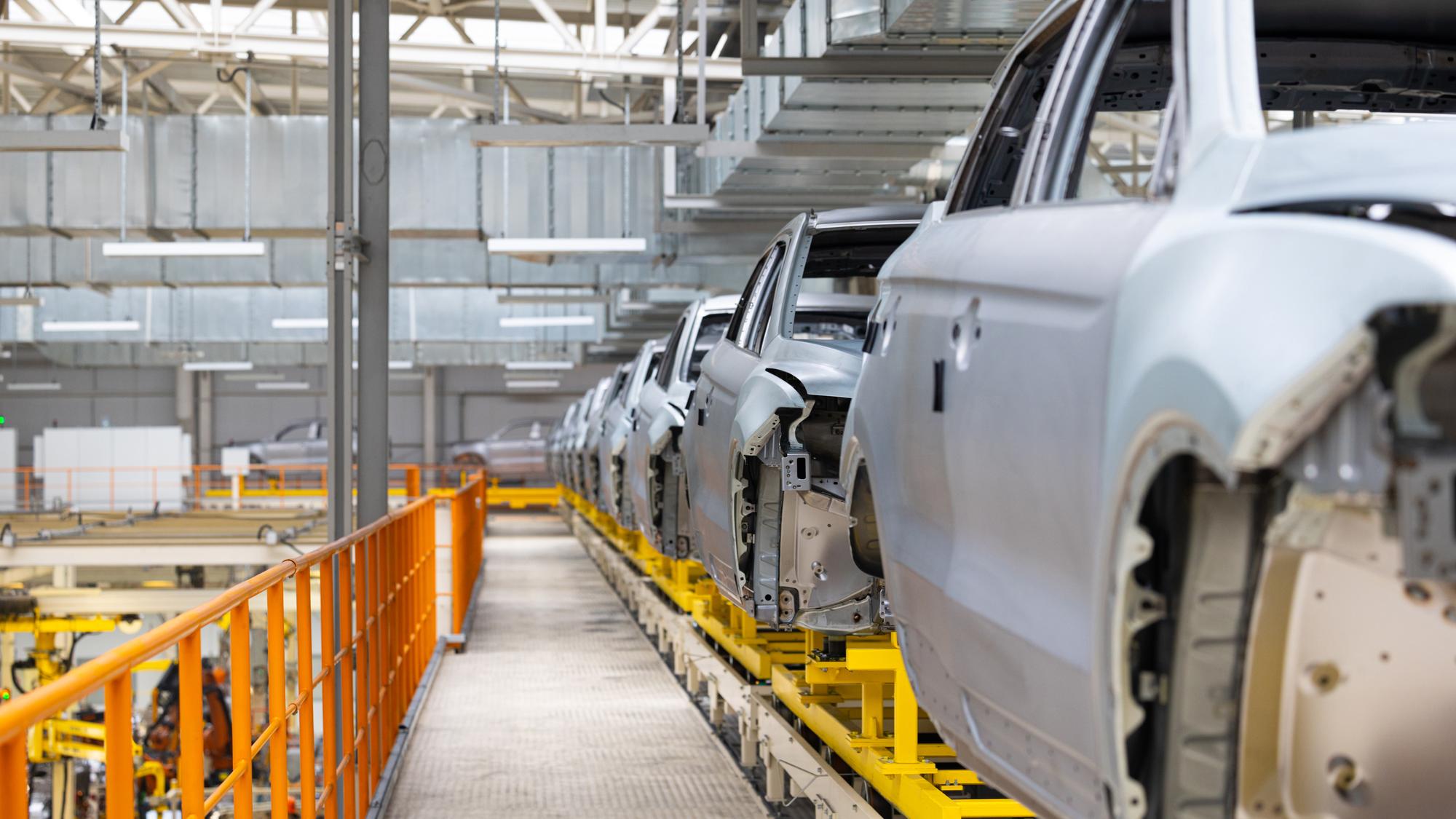
Why Toyota?
Toyota is one of the best-known examples of a company building a lasting lead through its processes. The principles of the Toyota Production System are applied in industrial companies worldwide, including many manufacturers in Austria. That is why this example focuses on execution.
This 7D analysis of Toyota is based solely on the public sources listed below. It is not client work: Point of New has no connection with Toyota. It is not a commissioned assessment, not investment advice and not a complete analysis.
The seven dimensions at Toyota
- D1 Market and strategy, strength: Toyota is one of the world's largest carmakers, with a broad range from small cars to commercial vehicles. With the Prius, Toyota brought a hybrid vehicle into series production in 1997.
- D2 Vision and goals, strength: Toyota has described its principles publicly for decades. For powertrains it deliberately pursues several paths side by side, with hybrid, plug-in hybrid, battery electric and fuel cell vehicles.
- D3 Offering and quality, strength: quality is built into the production system. According to Toyota, jidoka means that a machine or worker stops immediately when an abnormality occurs, so that no defective parts are passed on.
- D4 Team and partners, solid: Toyota works closely with a large network of suppliers who deliver exactly as needed. In 2024 irregularities in certification procedures came to light in Japan, at Toyota and at group companies. Toyota made them public and announced joint improvement work in the companies concerned. An analysis with internal data would look more closely at governance across the group.
- D5 Marketing and go-to-market, solid: Toyota sells mainly through dealer networks, and the brand stands for reliability. How far direct contact with end customers reaches is only partly visible from the outside.
- D6 Business model and financing, solid: car making requires heavy investment in plants, development and new powertrains. A production system that only makes what is needed reduces inventory and tied-up capital. Pursuing several powertrains spreads risk but also ties up resources in several technologies.
- D7 Timeline and project planning, strength: this is the core. According to Toyota, just-in-time means making only what is needed, when it is needed and in the amount needed. Jidoka stops immediately when something goes wrong. Kaizen, daily incremental improvement by all employees, is the foundation. The roots go back to Sakichi Toyoda's automatic loom and Kiichiro Toyoda's principle that a car cannot be completed if even one part is missing.
What the example shows about the method
- Execution can be the competitive edge: Toyota's greatest strength lies in D7. A strategy only works when processes carry it every day.
- The dimensions are connected: quality in D3 and tied-up capital in D6 are direct consequences of the production system in D7.
- A bottleneck can sit in the wider group: the certification cases in D4 show that even a strong system depends on rules and oversight in every company involved.
What SMEs can learn from Toyota
For industrial and trade businesses in particular, three ideas transfer directly:
- Start with daily improvement: small improvements by people on the line or in the office need no large budget, but a fixed routine and time set aside.
- Make errors visible immediately: stopping when something deviates and clarifying the cause saves rework, complaints and cost later.
- Read inventory as a signal: high stock levels often hide problems in processes. Producing to demand makes them visible and reduces tied-up capital.
What this means for your company
Few companies build cars. But the underlying question applies to every business: do our processes deliver what we promise our customers, and do we keep improving them? A 7D analysis asks these questions for your company, at the level you choose and with personal guidance. For a first look, use the free business model check below.
Sources
All information comes from the following public sources, as of November 2026. Figures refer to the 2025 financial year unless stated otherwise. Anything we could not verify has been left out.
Initial assessment
Business model check
You send us your details and documents, we review them personally and get back to you with a first assessment.
Frequently asked questions
What is the Toyota Production System?
A way of producing that aims to eliminate waste and deliver vehicles quickly, at low cost and in high quality. According to Toyota it rests on two pillars: just-in-time, making only what is needed, and jidoka, stopping immediately when something goes wrong. Its foundation is kaizen, daily improvement by all employees.
What can SMEs learn from the Toyota Production System?
Mainly three things: improve daily in small steps, make errors visible immediately and clarify their cause, and read inventory as a sign of problems in processes. This takes less budget than discipline and leadership.
Is this analysis based on internal Toyota data?
No. It relies solely on public sources, mainly information published by Toyota itself, and is deliberately simplified. Point of New has no connection with Toyota, and the analysis is not client work.
Related
Let's talk about your venture.
In a free initial call (30 minutes) we clarify where you stand and how we can support you.